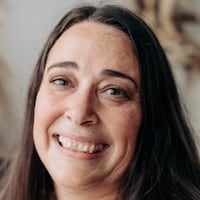
Menopause has been sitting front and center in my mind again, not as a distant “someday,” but as something imminent, unavoidable and deeply personal.
Months before cancer ever entered the picture, menopause was already on my radar. Like many women in my mid-40s, I was quietly navigating perimenopause — the often confusing, rarely talked about stretch of time where your body starts changing, but no one hands you a manual.
Around that time, I found a series on menopause written by fellow Dayton Daily News writer Marie Kriedman. Her reporting felt like a lifeline. It was informative, compassionate and, maybe most importantly, validating.
I reached out to thank her.
That thank-you turned into conversations, and those conversations turned into something bigger. You may have seen Marie’s column last week sharing my current struggles. Telling my story publicly wasn’t something I planned, but it’s something I believe in now. Because what I’m learning is this: I’m not alone.
Not even close.
I’ve learned so much from Marie’s series. Did you know according to the National Menopause Foundation, nearly 1.3 million women enter menopause every year? In a recent survey, 64 percent of respondents said menopause symptoms had impacted their quality of life. Many reported feeling isolated, misunderstood or unsupported, both personally and medically.

That sense of isolation shows up again and again in Marie’s reporting. Women describe wildly different symptoms, uneven medical support and a lack of honest conversation.
Women are busy. We are busy raising kids, working jobs, caring for parents, managing households. Menopause sneaks up on us while we’re focused on everyone else.
For some women, perimenopause is gradual. For others, like me, menopause arrives suddenly, without choice. Surgical menopause means my hormones won’t slowly taper off; they’ll stop and that reality is both frightening and clarifying.
What Marie’s series has taught me is that knowledge is power, conversations are important and there are options for women like me.
I’ve learned that lifestyle changes can make a real difference: prioritizing sleep, cutting back on caffeine and sugar, exercising to combat stress and brain fog, and eating a diet rich in fiber. Most importantly, I’ve learned that women need support, from doctors, families and each other.
Right now, I’m preparing for surgery, bracing for changes and planning for the worst while hoping for the best. I’m tracking symptoms, asking questions and advocating for myself in ways I never had to before. I’m learning that menopause isn’t a personal failure or a punchline, it’s a biological transition that deserves attention, compassion and real medical support.
If you’re entering perimenopause, already in menopause, or staring down surgical menopause like I am, know this: you’re not broken, you’re not imagining things and you’re not alone.
Talking about menopause didn’t make this season harder for me, it made it survivable. I’m thankful for Marie and others for sharing their stories. If talking helps even one woman feel less isolated, then it’s worth every uncomfortable conversation.
Because silence never helped women feel better, but knowledge just might.
This column is by Pamela Chandler, a local mom who writes about motherhood and family. Reach out to her at thechandlercrew3@gmail.com.
MORE MENOPAUSE CONTENT
Marie Kriedman will have occasional content about menopause on the cover of Tuesday’s Lifestyles section beginning this week. See it online, too.
About the Author